
Protecting People, Processes and Production: The Case for Iwaki Dosing Cabinets
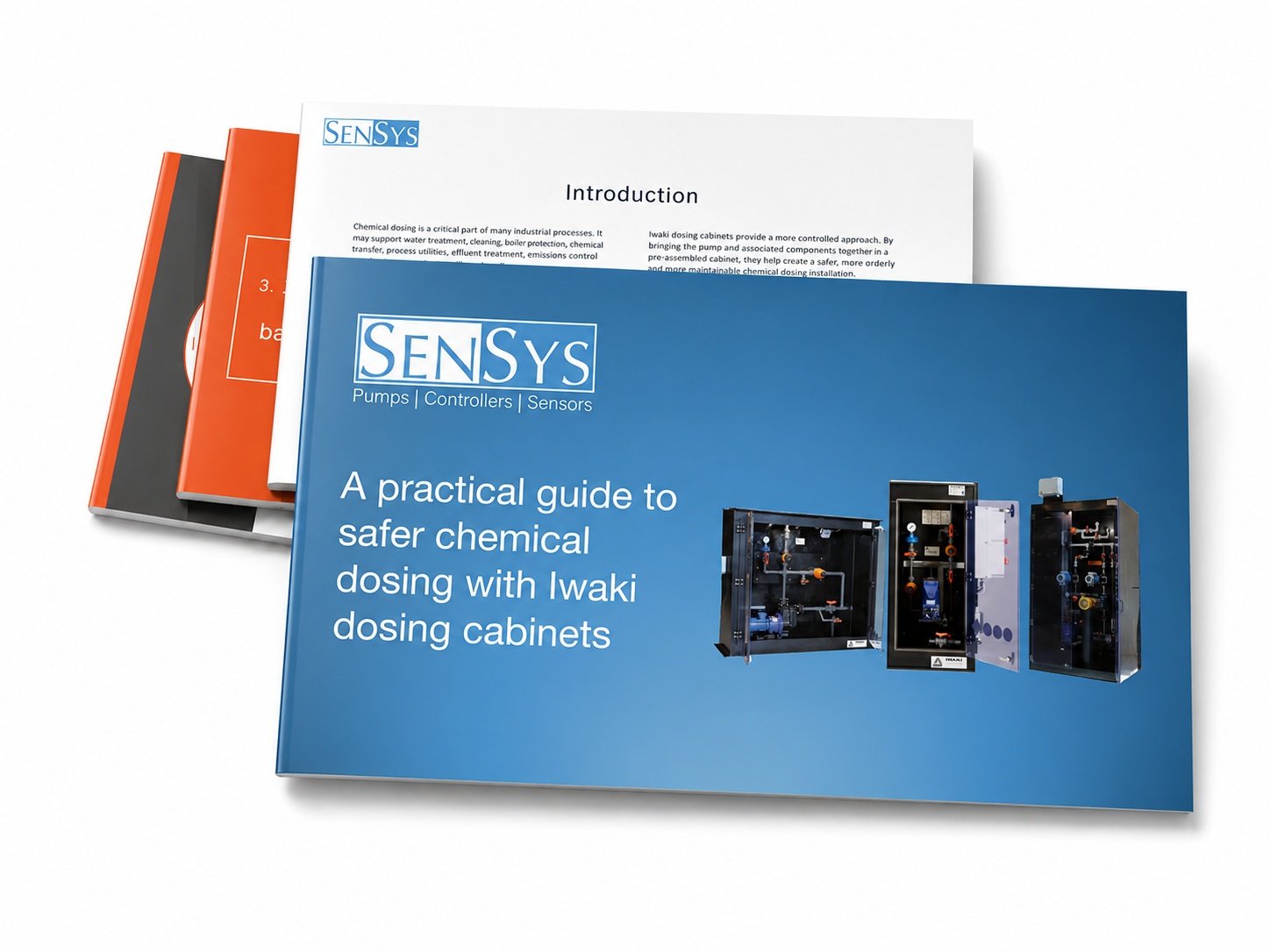
Sensys launch Iwaki dosing cabinets in the UK
In high-performing process environments, chemical dosing is not simply an operational requirement. It is a critical part of risk management, compliance, safety and production continuity. Across sectors such as water treatment, food and beverage, pharmaceuticals, semiconductor manufacturing and chemical processing, the way aggressive liquids are handled can have a direct impact on people, assets, output and reputation.
That is why the design of the dosing system matters.
A pump may be the heart of the system, but it is only one part of the wider installation. Pipework, valves, fittings, containment, access, visibility, material compatibility and documentation all influence how safely and reliably a chemical dosing process performs over time.
As the official UK distributor for Iwaki, Sensys supplies dosing cabinet solutions that bring together proven pump technology, chemical-resistant materials and pre-assembled system design. With more than 400 standard configurations available, alongside the option for bespoke engineered solutions, these systems are designed to make chemical dosing safer, more orderly and more reliable from the outset.
Chemical dosing is not just a pumping task
In process industries, chemical dosing is often discussed in terms of flow rate, pressure and chemical compatibility. Those factors matter, of course. But they are only part of the picture.
• A chemical dosing installation also has to answer much wider operational questions.
• How do we protect operators from splashes, leaks and fumes?
• How do we reduce the risk of exposure when aggressive chemicals are being handled?
• How do we make inspection and maintenance easier?
• How do we avoid unnecessary plant downtime?
• How do we keep critical dosing duties running if a pump needs attention?
• How do we ensure the system is orderly, documented and suitable for the chemical being dosed?
A dosing pump mounted into a basic installation may technically move chemical from one point to another. But in demanding process environments, that is not enough. The wider system needs to be safe, robust, accessible and properly considered.
Iwaki dosing cabinets help address that wider challenge by creating a controlled, purpose-built dosing environment around the pump and associated components.
That is why the design of the dosing system matters.
A pump may be the heart of the system, but it is only one part of the wider installation. Pipework, valves, fittings, containment, access, visibility, material compatibility and documentation all influence how safely and reliably a chemical dosing process performs over time.
As the official UK distributor for Iwaki, Sensys supplies dosing cabinet solutions that bring together proven pump technology, chemical-resistant materials and pre-assembled system design. With more than 400 standard configurations available, alongside the option for bespoke engineered solutions, these systems are designed to make chemical dosing safer, more orderly and more reliable from the outset.
Chemical dosing is not just a pumping task
In process industries, chemical dosing is often discussed in terms of flow rate, pressure and chemical compatibility. Those factors matter, of course. But they are only part of the picture.
• A chemical dosing installation also has to answer much wider operational questions.
• How do we protect operators from splashes, leaks and fumes?
• How do we reduce the risk of exposure when aggressive chemicals are being handled?
• How do we make inspection and maintenance easier?
• How do we avoid unnecessary plant downtime?
• How do we keep critical dosing duties running if a pump needs attention?
• How do we ensure the system is orderly, documented and suitable for the chemical being dosed?
A dosing pump mounted into a basic installation may technically move chemical from one point to another. But in demanding process environments, that is not enough. The wider system needs to be safe, robust, accessible and properly considered.
Iwaki dosing cabinets help address that wider challenge by creating a controlled, purpose-built dosing environment around the pump and associated components.
1. Supporting compliance through better chemical management
Compliance is not limited to the final product, treated water, manufacturing output or discharge quality. It also includes how chemicals are stored, transferred, dosed, contained and maintained.
For organisations handling aggressive or hazardous liquids, chemical dosing points can easily become compliance weak spots. Exposed pipework, inconsistent installation standards, poor access, unclear flow paths and uncontained leaks all increase operational risk.
A cabinet-based dosing system helps bring order to that environment by placing the pump, pipework, valves and fittings within a defined, purpose-built system. This supports a more controlled approach to chemical handling and reduces the reliance on ad hoc site assembly.
The pre-assembled nature of the system also supports compliance because the installation is less dependent on sourcing and assembling separate components on site. Standard Iwaki dosing cabinet configurations provide a clear, documented and ready-to-use approach, with key system information such as P&I documentation available for many standard solutions. Where the application requires something more specific, bespoke designs can be developed around the chemical, process duty, site layout, connection requirements and operating environment.
Compliance is not just about meeting minimum requirements. It is about demonstrating that risk has been understood, reduced and managed through appropriate engineering decisions.
For organisations handling aggressive or hazardous liquids, chemical dosing points can easily become compliance weak spots. Exposed pipework, inconsistent installation standards, poor access, unclear flow paths and uncontained leaks all increase operational risk.
A cabinet-based dosing system helps bring order to that environment by placing the pump, pipework, valves and fittings within a defined, purpose-built system. This supports a more controlled approach to chemical handling and reduces the reliance on ad hoc site assembly.
The pre-assembled nature of the system also supports compliance because the installation is less dependent on sourcing and assembling separate components on site. Standard Iwaki dosing cabinet configurations provide a clear, documented and ready-to-use approach, with key system information such as P&I documentation available for many standard solutions. Where the application requires something more specific, bespoke designs can be developed around the chemical, process duty, site layout, connection requirements and operating environment.
Compliance is not just about meeting minimum requirements. It is about demonstrating that risk has been understood, reduced and managed through appropriate engineering decisions.
2. Improving operator safety around aggressive chemicals
Many chemicals used in process industries are essential to production, cleaning, treatment or quality control. But they can also be hazardous to handle.
Acids, alkalis, sodium hypochlorite, caustic soda, ferric chloride, cleaning chemicals, additives and treatment chemicals can all present risks from splashing, leakage, fumes, corrosion or accidental contact.
The highest-risk moments are often not during stable operation. They are during inspection, maintenance, priming, chemical changeover, fault finding or emergency response.
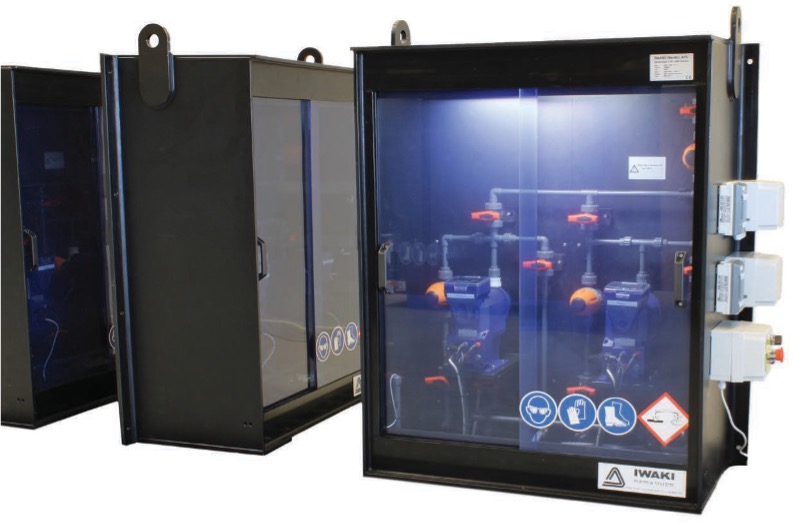
A dosing cabinet provides a physical and practical layer of protection around the dosing system. It helps separate the operator from the dosing equipment while still allowing the system to be inspected and maintained.
Transparent cabinet doors are especially useful in this context. They allow visual checks without immediately exposing the operator to the dosing arrangement. Staff can identify signs of leaks, crystallisation, incorrect valve positions or unusual pump behaviour before opening the cabinet.
That ability to inspect safely supports better maintenance discipline. When equipment is easier and safer to check, problems are more likely to be found early.
Acids, alkalis, sodium hypochlorite, caustic soda, ferric chloride, cleaning chemicals, additives and treatment chemicals can all present risks from splashing, leakage, fumes, corrosion or accidental contact.
The highest-risk moments are often not during stable operation. They are during inspection, maintenance, priming, chemical changeover, fault finding or emergency response.
A dosing cabinet provides a physical and practical layer of protection around the dosing system. It helps separate the operator from the dosing equipment while still allowing the system to be inspected and maintained.
Transparent cabinet doors are especially useful in this context. They allow visual checks without immediately exposing the operator to the dosing arrangement. Staff can identify signs of leaks, crystallisation, incorrect valve positions or unusual pump behaviour before opening the cabinet.
That ability to inspect safely supports better maintenance discipline. When equipment is easier and safer to check, problems are more likely to be found early.
3. Reducing downtime through pre-assembled, reliable design
Downtime is expensive in any process environment. In some sectors, the cost of lost production can quickly outweigh the cost of the equipment itself.
A chemical dosing fault can affect product quality, cleaning performance, wastewater treatment, pH control, emissions control, disinfection, process stability or production continuity. Even where the issue is technically small, the operational impact can be significant.
Iwaki dosing cabinets help reduce downtime in several ways.
They simplify the installation by bringing the pump, pipework, valves, fittings and related components together within a pre-assembled system. This can reduce the time and complexity involved in designing, sourcing and building a dosing installation from separate parts.
They also support standardisation. Where organisations operate multiple sites or repeat applications, a standard cabinet approach can make systems easier to understand, maintain and support. Engineers are not faced with a completely different installation every time they attend site.
For critical duties, dosing cabinets can also be configured with multiple pumps or provision for a reserve pump, depending on the application. That means resilience can be considered at the design stage rather than added later as a workaround.
If a duty pump requires maintenance, a properly specified standby or reserve arrangement can help protect the process from immediate disruption. That changes the nature of the problem. Instead of an urgent production risk, it becomes a planned maintenance activity.
A chemical dosing fault can affect product quality, cleaning performance, wastewater treatment, pH control, emissions control, disinfection, process stability or production continuity. Even where the issue is technically small, the operational impact can be significant.
Iwaki dosing cabinets help reduce downtime in several ways.
They simplify the installation by bringing the pump, pipework, valves, fittings and related components together within a pre-assembled system. This can reduce the time and complexity involved in designing, sourcing and building a dosing installation from separate parts.
They also support standardisation. Where organisations operate multiple sites or repeat applications, a standard cabinet approach can make systems easier to understand, maintain and support. Engineers are not faced with a completely different installation every time they attend site.
For critical duties, dosing cabinets can also be configured with multiple pumps or provision for a reserve pump, depending on the application. That means resilience can be considered at the design stage rather than added later as a workaround.
If a duty pump requires maintenance, a properly specified standby or reserve arrangement can help protect the process from immediate disruption. That changes the nature of the problem. Instead of an urgent production risk, it becomes a planned maintenance activity.
4. Avoiding running issues caused by poor installation
Many chemical dosing problems are not caused by the pump itself. They are caused by the installation around the pump.
Common causes of running issues include:
• Incorrect suction arrangements
• Poor valve placement
• Incompatible materials
• Poor access for maintenance
• Unclear pipe runs
• Unsupported pipework
• Fittings exposed to weather or impact
• Limited provision for isolation or servicing
• Systems modified over time without a clear design basis
These issues can lead to recurring operational problems. Pumps may lose prime. Lines may block. Fittings may leak. Valves may become difficult to operate. Operators may delay inspections because access is poor. Temporary fixes may become permanent features of the system.
A cabinet-based solution reduces this risk by treating the dosing system as a complete engineered arrangement, rather than a collection of individual components.
Common causes of running issues include:
• Incorrect suction arrangements
• Poor valve placement
• Incompatible materials
• Poor access for maintenance
• Unclear pipe runs
• Unsupported pipework
• Fittings exposed to weather or impact
• Limited provision for isolation or servicing
• Systems modified over time without a clear design basis
These issues can lead to recurring operational problems. Pumps may lose prime. Lines may block. Fittings may leak. Valves may become difficult to operate. Operators may delay inspections because access is poor. Temporary fixes may become permanent features of the system.
A cabinet-based solution reduces this risk by treating the dosing system as a complete engineered arrangement, rather than a collection of individual components.
Material selection is also important. Chemical compatibility is not optional when aggressive liquids are involved. The wrong material can lead to swelling, cracking, embrittlement, leaks or premature failure.
Iwaki dosing cabinets are designed around the safe handling of chemicals, using materials selected for the duty and operating environment. For organisations managing high-value processes, this helps reduce the risk of avoidable faults caused by weak points in the installation.
Iwaki dosing cabinets are designed around the safe handling of chemicals, using materials selected for the duty and operating environment. For organisations managing high-value processes, this helps reduce the risk of avoidable faults caused by weak points in the installation.
5. Making inspection and maintenance easier
A dosing system that is difficult to inspect will not be inspected as effectively as one that is visible, orderly and accessible.
This is not a criticism of operators or engineers. It is simply the reality of busy industrial sites. Equipment that is awkward to access, poorly labelled or visually unclear tends to receive less attention until something goes wrong.
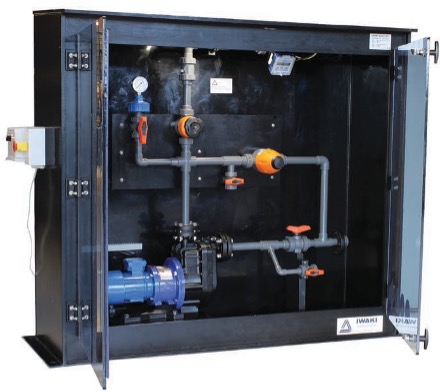
A dosing cabinet gives the dosing system a defined and logical layout. Components are not scattered across a wall, hidden behind other equipment or exposed to unnecessary damage. The pump, pipework and fittings are brought together in a way that supports inspection, servicing and fault diagnosis.
This can help maintenance teams check:
• Pump operation
• Suction condition
• Discharge pressure
• Valve positions
• Visible leakage
• Air ingress
• Chemical crystallisation
• Pipework condition
• Control signals
• Calibration and dosing output
The cabinet does not remove the need for skilled engineering support. But it does make the system easier to understand and maintain.
This is important because maintainability is part of asset performance. A system that is easier to inspect and service is less likely to suffer from hidden deterioration, delayed maintenance or avoidable failure.
This is not a criticism of operators or engineers. It is simply the reality of busy industrial sites. Equipment that is awkward to access, poorly labelled or visually unclear tends to receive less attention until something goes wrong.
A dosing cabinet gives the dosing system a defined and logical layout. Components are not scattered across a wall, hidden behind other equipment or exposed to unnecessary damage. The pump, pipework and fittings are brought together in a way that supports inspection, servicing and fault diagnosis.
This can help maintenance teams check:
• Pump operation
• Suction condition
• Discharge pressure
• Valve positions
• Visible leakage
• Air ingress
• Chemical crystallisation
• Pipework condition
• Control signals
• Calibration and dosing output
The cabinet does not remove the need for skilled engineering support. But it does make the system easier to understand and maintain.
This is important because maintainability is part of asset performance. A system that is easier to inspect and service is less likely to suffer from hidden deterioration, delayed maintenance or avoidable failure.
6. Supporting safer dosing across demanding process applications
Chemical dosing is used across many process industries, but the reason for investing in a cabinet-based system is not identical in every sector. The value depends on what is at risk if the dosing system is unsafe, unreliable or difficult to maintain.
In water and wastewater treatment, dosing systems are often linked directly to compliance, discharge quality and environmental protection. Duties such as pH correction, precipitation chemical dosing, disinfection and odour control rely on consistent chemical delivery. If dosing becomes unreliable, the issue can quickly move from an engineering problem to a compliance risk.
In food and beverage production, chemical dosing often supports cleaning, hygiene, utilities and wastewater treatment. CIP systems, bottle washing, pH adjustment and water treatment duties all depend on safe and reliable chemical handling. A dosing fault can affect cleaning performance, production continuity or site compliance.
In pharmaceutical manufacturing, the emphasis is often on control, documentation and maintainability. Dosing systems may support utilities, cleaning processes, purified water treatment, neutralisation or effluent treatment. In these environments, a clear, accessible and well-documented dosing arrangement supports the engineering discipline expected in regulated manufacturing environments.
In semiconductor and microelectronics manufacturing, chemical handling is closely linked to process reliability, uptime and contamination control. Dosing may support ultra-pure water treatment, wastewater neutralisation, scrubber systems or controlled chemical addition within plant utilities. In high-value production environments, even small dosing issues can carry significant operational consequences.
Across these sectors, the common requirement is not simply to dose a chemical. It is to manage chemical dosing in a way that protects people, supports compliance, reduces maintenance risk and keeps critical processes running.
The strength of the Iwaki range is that it does not treat these applications as identical. With more than 400 standard configurations available, as well as the option for bespoke engineered solutions, dosing cabinets can be selected or designed around the chemical, pump duty, connection arrangement, operating environment and maintenance requirements of the site.
In water and wastewater treatment, dosing systems are often linked directly to compliance, discharge quality and environmental protection. Duties such as pH correction, precipitation chemical dosing, disinfection and odour control rely on consistent chemical delivery. If dosing becomes unreliable, the issue can quickly move from an engineering problem to a compliance risk.
In food and beverage production, chemical dosing often supports cleaning, hygiene, utilities and wastewater treatment. CIP systems, bottle washing, pH adjustment and water treatment duties all depend on safe and reliable chemical handling. A dosing fault can affect cleaning performance, production continuity or site compliance.
In pharmaceutical manufacturing, the emphasis is often on control, documentation and maintainability. Dosing systems may support utilities, cleaning processes, purified water treatment, neutralisation or effluent treatment. In these environments, a clear, accessible and well-documented dosing arrangement supports the engineering discipline expected in regulated manufacturing environments.
In semiconductor and microelectronics manufacturing, chemical handling is closely linked to process reliability, uptime and contamination control. Dosing may support ultra-pure water treatment, wastewater neutralisation, scrubber systems or controlled chemical addition within plant utilities. In high-value production environments, even small dosing issues can carry significant operational consequences.
Across these sectors, the common requirement is not simply to dose a chemical. It is to manage chemical dosing in a way that protects people, supports compliance, reduces maintenance risk and keeps critical processes running.
The strength of the Iwaki range is that it does not treat these applications as identical. With more than 400 standard configurations available, as well as the option for bespoke engineered solutions, dosing cabinets can be selected or designed around the chemical, pump duty, connection arrangement, operating environment and maintenance requirements of the site.
7. Protecting the environment as well as the operator
Chemical dosing systems need to protect people, but they also need to protect the surrounding environment.
Even small leaks can create problems. Chemicals can damage floors, bunds, drains, nearby equipment or surrounding infrastructure. Leaks can create slip risks, corrosion, fumes, clean-up requirements and potential environmental consequences.
A cabinet-based system helps contain and control the dosing area. It creates a dedicated space around the pump and associated components, helping reduce the likelihood that a leak or fitting issue becomes a wider site problem.
For organisations with strong environmental, health and safety standards, this is a valuable part of risk reduction. It supports a more disciplined approach to chemical handling and helps demonstrate that safety and environmental protection have been considered at equipment level.
Iwaki’s wider range also includes safety cabinets, process units, IBC storage units, filling cabinets, mobile devices and basic safety solutions for chemical handling applications. This means dosing cabinets can form part of a broader approach to safer handling of aggressive liquids across a site.
Even small leaks can create problems. Chemicals can damage floors, bunds, drains, nearby equipment or surrounding infrastructure. Leaks can create slip risks, corrosion, fumes, clean-up requirements and potential environmental consequences.
A cabinet-based system helps contain and control the dosing area. It creates a dedicated space around the pump and associated components, helping reduce the likelihood that a leak or fitting issue becomes a wider site problem.
For organisations with strong environmental, health and safety standards, this is a valuable part of risk reduction. It supports a more disciplined approach to chemical handling and helps demonstrate that safety and environmental protection have been considered at equipment level.
Iwaki’s wider range also includes safety cabinets, process units, IBC storage units, filling cabinets, mobile devices and basic safety solutions for chemical handling applications. This means dosing cabinets can form part of a broader approach to safer handling of aggressive liquids across a site.
8. Reducing total cost through better reliability and reduced complexity
The cost of a dosing cabinet should not be compared only with the cost of a standalone dosing pump.
A better comparison is between a purpose-built dosing cabinet and a dosing system assembled from separate components, with all the additional time, labour, risk and documentation that can involve.
A pre-assembled cabinet solution can help reduce total project complexity by bringing key elements of the dosing system together from the outset. This can support more predictable specification, procurement, installation and commissioning.
Standardisation can also help reduce project time. Iwaki products for the UK market are supplied from Iwaki Europe in Germany, so lead times should always be confirmed at the point of order. However, compared with sourcing individual components and assembling a dosing system on site, a pre-configured cabinet solution can offer a more predictable route from specification to installation.
The longer-term value comes from reducing avoidable problems.
Potential savings may come from:
• Reduced installation complexity
• Fewer site assembly issues
• Easier commissioning
• Reduced maintenance time
• Fewer leaks and callouts
• Easier inspection
• Improved standardisation of spares
• Better protection of equipment
• Reduced risk of compliance incidents
• Less unplanned downtime
For high-value production environments, this is where the commercial case becomes strongest. Avoided downtime, avoided incidents and avoided maintenance disruption can be far more significant than the initial purchase price difference between a basic pump installation and a properly engineered dosing solution.
A better comparison is between a purpose-built dosing cabinet and a dosing system assembled from separate components, with all the additional time, labour, risk and documentation that can involve.
A pre-assembled cabinet solution can help reduce total project complexity by bringing key elements of the dosing system together from the outset. This can support more predictable specification, procurement, installation and commissioning.
Standardisation can also help reduce project time. Iwaki products for the UK market are supplied from Iwaki Europe in Germany, so lead times should always be confirmed at the point of order. However, compared with sourcing individual components and assembling a dosing system on site, a pre-configured cabinet solution can offer a more predictable route from specification to installation.
The longer-term value comes from reducing avoidable problems.
Potential savings may come from:
• Reduced installation complexity
• Fewer site assembly issues
• Easier commissioning
• Reduced maintenance time
• Fewer leaks and callouts
• Easier inspection
• Improved standardisation of spares
• Better protection of equipment
• Reduced risk of compliance incidents
• Less unplanned downtime
For high-value production environments, this is where the commercial case becomes strongest. Avoided downtime, avoided incidents and avoided maintenance disruption can be far more significant than the initial purchase price difference between a basic pump installation and a properly engineered dosing solution.
9. Built around proven Iwaki pump technology
A cabinet is only as good as the equipment inside it.
Iwaki has a long-standing reputation for chemical pump technology, particularly in demanding applications involving aggressive liquids. For customers already using Iwaki pumps, dosing cabinets offer a way to integrate that pump technology into a safer, more complete system.
Depending on the application, Iwaki dosing cabinets can incorporate a range of pump technologies, including EWN, EWP, IX-B, IX-C, IX-D, EH-E and LK-F options. This allows the system to be specified around the chemical, capacity, pressure, control and redundancy requirements of the duty.
That flexibility matters because chemical dosing requirements vary widely.
A smaller chemical correction duty may need precise low-flow dosing. A production or treatment process may require higher capacity. Some applications need digital control, turndown, higher discharge pressure, chemical resistance or standby capacity.
The cabinet format allows those choices to be considered as part of the overall system, rather than treating the pump selection separately from the safety and maintenance requirements of the installation.
Iwaki has a long-standing reputation for chemical pump technology, particularly in demanding applications involving aggressive liquids. For customers already using Iwaki pumps, dosing cabinets offer a way to integrate that pump technology into a safer, more complete system.
Depending on the application, Iwaki dosing cabinets can incorporate a range of pump technologies, including EWN, EWP, IX-B, IX-C, IX-D, EH-E and LK-F options. This allows the system to be specified around the chemical, capacity, pressure, control and redundancy requirements of the duty.
That flexibility matters because chemical dosing requirements vary widely.
A smaller chemical correction duty may need precise low-flow dosing. A production or treatment process may require higher capacity. Some applications need digital control, turndown, higher discharge pressure, chemical resistance or standby capacity.
The cabinet format allows those choices to be considered as part of the overall system, rather than treating the pump selection separately from the safety and maintenance requirements of the installation.
10. Creating orderliness in complex operating environments
One of the most practical advantages of a dosing cabinet is orderliness.
In real industrial environments, disorder creates risk. When dosing systems are inconsistent, poorly labelled or difficult to interpret, operators and contractors have to rely too heavily on local knowledge. That may work when experienced people are available, but it creates vulnerability during shift changes, staff turnover, emergencies or contractor visits.
A more orderly dosing installation supports:
• Clearer training
• Safer handover
• Faster fault finding
• Easier audits
• Better housekeeping
• More consistent maintenance
• Greater operator confidence
A dosing cabinet gives the chemical dosing system a proper home. That may sound simple, but in demanding process environments, simple improvements in layout, visibility and access often make a significant difference to day-to-day safety and reliability.
In real industrial environments, disorder creates risk. When dosing systems are inconsistent, poorly labelled or difficult to interpret, operators and contractors have to rely too heavily on local knowledge. That may work when experienced people are available, but it creates vulnerability during shift changes, staff turnover, emergencies or contractor visits.
A more orderly dosing installation supports:
• Clearer training
• Safer handover
• Faster fault finding
• Easier audits
• Better housekeeping
• More consistent maintenance
• Greater operator confidence
A dosing cabinet gives the chemical dosing system a proper home. That may sound simple, but in demanding process environments, simple improvements in layout, visibility and access often make a significant difference to day-to-day safety and reliability.
11. Suitable for indoor and outdoor installation
Chemical dosing systems are not always installed in ideal indoor environments.
They may be located in external plant areas, kiosks, treatment works, utilities areas, chemical storage zones, production support areas or remote installations. In these locations, dosing equipment may be exposed to weather, UV, fumes, splashes, impact risk or general site contamination.
Iwaki dosing cabinets are available for indoor and outdoor installation, with durable materials selected for chemical resistance and demanding operating conditions.
This helps protect both the operator and the equipment. It also supports more consistent dosing performance by reducing the exposure of key components to conditions that may otherwise contribute to deterioration or premature failure.
For sites where reliability matters and access is limited, this can be particularly valuable.
Chemical dosing systems are not always installed in ideal indoor environments.
They may be located in external plant areas, kiosks, treatment works, utilities areas, chemical storage zones, production support areas or remote installations. In these locations, dosing equipment may be exposed to weather, UV, fumes, splashes, impact risk or general site contamination.
Iwaki dosing cabinets are available for indoor and outdoor installation, with durable materials selected for chemical resistance and demanding operating conditions.
They may be located in external plant areas, kiosks, treatment works, utilities areas, chemical storage zones, production support areas or remote installations. In these locations, dosing equipment may be exposed to weather, UV, fumes, splashes, impact risk or general site contamination.
Iwaki dosing cabinets are available for indoor and outdoor installation, with durable materials selected for chemical resistance and demanding operating conditions.
This helps protect both the operator and the equipment. It also supports more consistent dosing performance by reducing the exposure of key components to conditions that may otherwise contribute to deterioration or premature failure.
For sites where reliability matters and access is limited, this can be particularly valuable.
Chemical dosing systems are not always installed in ideal indoor environments.
They may be located in external plant areas, kiosks, treatment works, utilities areas, chemical storage zones, production support areas or remote installations. In these locations, dosing equipment may be exposed to weather, UV, fumes, splashes, impact risk or general site contamination.
Iwaki dosing cabinets are available for indoor and outdoor installation, with durable materials selected for chemical resistance and demanding operating conditions.
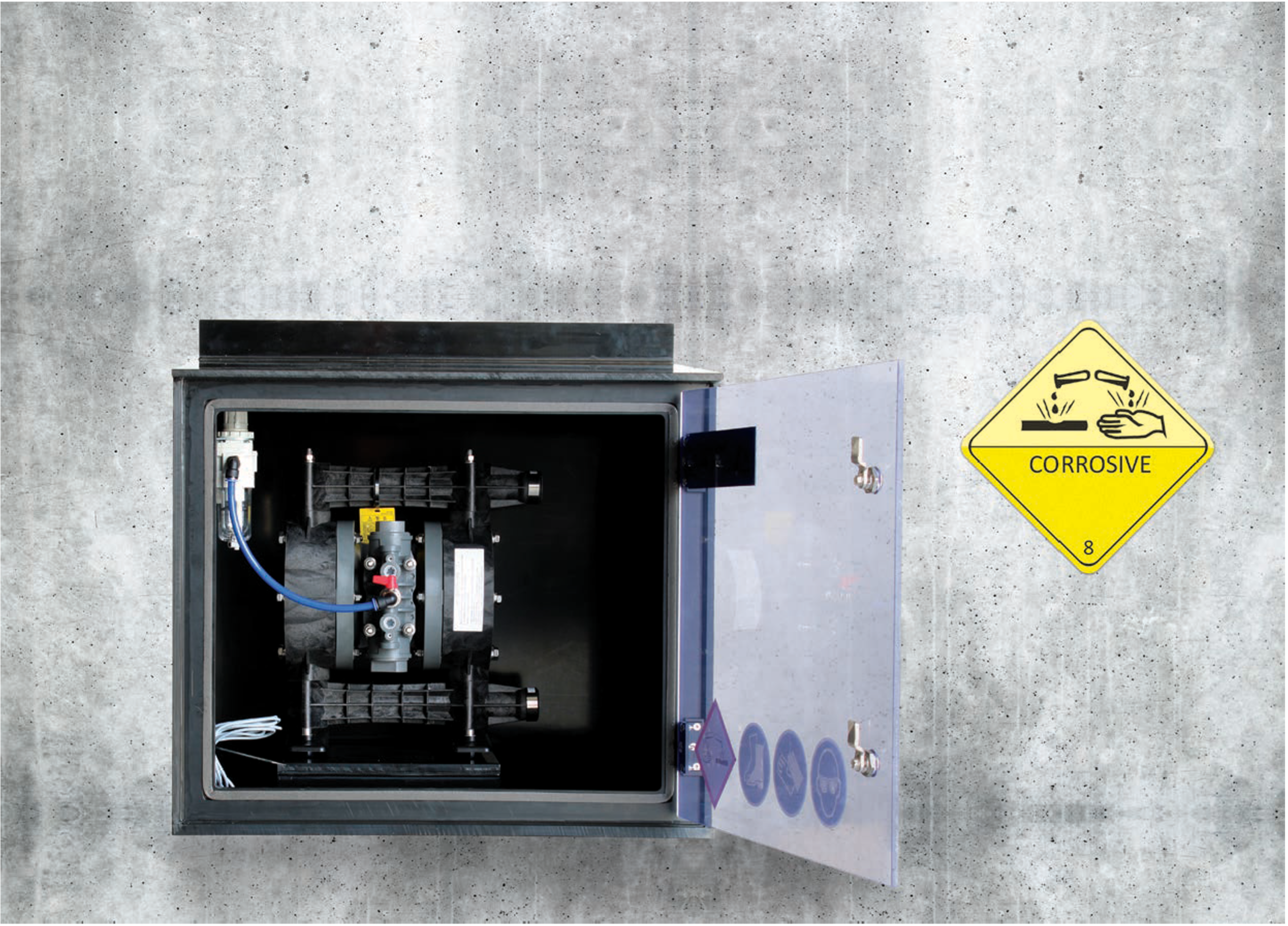
This helps protect both the operator and the equipment. It also supports more consistent dosing performance by reducing the exposure of key components to conditions that may otherwise contribute to deterioration or premature failure.
For sites where reliability matters and access is limited, this can be particularly valuable.
For sites where reliability matters and access is limited, this can be particularly valuable.
12. Standard where possible, bespoke where necessary
Not every chemical dosing application needs a bespoke system. In many cases, a standard dosing cabinet configuration will offer the right balance of safety, performance, lead time and cost.
However, blue-chip process environments often have specific requirements. These may relate to the chemical being dosed, pipework materials, duty and standby philosophy, site layout, connection arrangements, control requirements, documentation, access restrictions or environmental conditions.
That is why it is important to have both standard and bespoke options.
Standard Iwaki dosing cabinet configurations provide a proven starting point for many applications. Where the duty is more complex, bespoke engineered designs can be developed to suit the process and site requirements.
This gives customers a practical route to the right solution, rather than forcing a standard product into an application where it does not quite fit.
However, blue-chip process environments often have specific requirements. These may relate to the chemical being dosed, pipework materials, duty and standby philosophy, site layout, connection arrangements, control requirements, documentation, access restrictions or environmental conditions.
That is why it is important to have both standard and bespoke options.
Standard Iwaki dosing cabinet configurations provide a proven starting point for many applications. Where the duty is more complex, bespoke engineered designs can be developed to suit the process and site requirements.
This gives customers a practical route to the right solution, rather than forcing a standard product into an application where it does not quite fit.
A safer and more reliable approach to chemical dosing
Iwaki dosing cabinets are not simply a neat way to house a dosing pump. They are a practical response to some of the most important issues faced by process operators, engineering teams and health and safety managers.
They help support compliance by creating a more controlled and documented approach to chemical dosing.
They improve safety by reducing exposure risk around aggressive liquids.
They support production continuity by improving reliability, access, maintainability and resilience.
They reduce running issues by replacing fragmented site-built arrangements with a more orderly, purpose-built system.
They protect people, equipment, the environment and the wider production process.
For high-performing organisations, that is the real value. Chemical dosing may be only one part of the process, but when it fails, the consequences can be significant.
A well-specified dosing cabinet helps reduce that risk from the start.
As the official UK distributor for Iwaki, Sensys supports customers in selecting standard and bespoke dosing cabinet solutions for demanding chemical dosing applications across water treatment, food and beverage, pharmaceuticals, semiconductor manufacturing and wider industrial processing. The result is a safer, cleaner and more reliable way to manage aggressive liquids, with the engineering discipline required by modern process environments.
They help support compliance by creating a more controlled and documented approach to chemical dosing.
They improve safety by reducing exposure risk around aggressive liquids.
They support production continuity by improving reliability, access, maintainability and resilience.
They reduce running issues by replacing fragmented site-built arrangements with a more orderly, purpose-built system.
They protect people, equipment, the environment and the wider production process.
For high-performing organisations, that is the real value. Chemical dosing may be only one part of the process, but when it fails, the consequences can be significant.
A well-specified dosing cabinet helps reduce that risk from the start.
As the official UK distributor for Iwaki, Sensys supports customers in selecting standard and bespoke dosing cabinet solutions for demanding chemical dosing applications across water treatment, food and beverage, pharmaceuticals, semiconductor manufacturing and wider industrial processing. The result is a safer, cleaner and more reliable way to manage aggressive liquids, with the engineering discipline required by modern process environments.